Back in September 2023, I quietly grabbed 10 shares of Lyft (LYFT) at $10.717 each — a total of $107.17. Not exactly “Wall Street Whale” material, but enough to play the long game with the Double-Up Free Stock Strategy.
Fast forward to October 7, 2025: Lyft hit $20.94, so I sold 5 shares for $104.72. That nearly refunded my entire original cost, leaving me with 5 free shares that I can now hold forever, guilt-free.
Let’s see how that math looks:
- Invested: $107.17 (10 shares @ $10.717)
- Cash received (5 sold): $104.72
- Free shares left: 5 shares worth $104.72
- Total value: $209.44
- Profit: $102.27
- Return: +95%
Why I Bought Lyft in the First Place
I didn’t buy Lyft expecting an instant turnaround. In 2023, it was the underdog — Uber’s smaller cousin that everyone loved to ignore. But that made it interesting. I even wrote back then that Lyft looked undervalued versus Uber, and it turned out to be true.
Here’s why:
1. Valuation Advantage
Lyft was trading around 1.5–2× price-to-sales, while Uber was closer to 3–4×.
Uber’s P/E hovered around 70 in 2024; Lyft didn’t even have one yet — but its losses were narrowing fast. By late 2024, analysts were projecting Lyft could reach break-even in 2025.
2. Financials and Focus
Lyft’s management tightened costs, optimized incentives for drivers, and improved margins. Its adjusted EBITDA turned positive, and free cash flow started creeping up. The company was getting leaner and more disciplined.
3. The AI Angle
While “AI” was the buzzword of 2024–25, Lyft wasn’t just name-dropping it. The company was actually using AI for smarter ride dispatch, dynamic pricing, and predictive driver routing — all invisible to riders, but powerful for efficiency.
And, as luck (or foresight?) would have it, that AI theme exploded again when Lyft made a major strategic move in late 2025…
🚗 The Waymo Partnership That Changed Everything
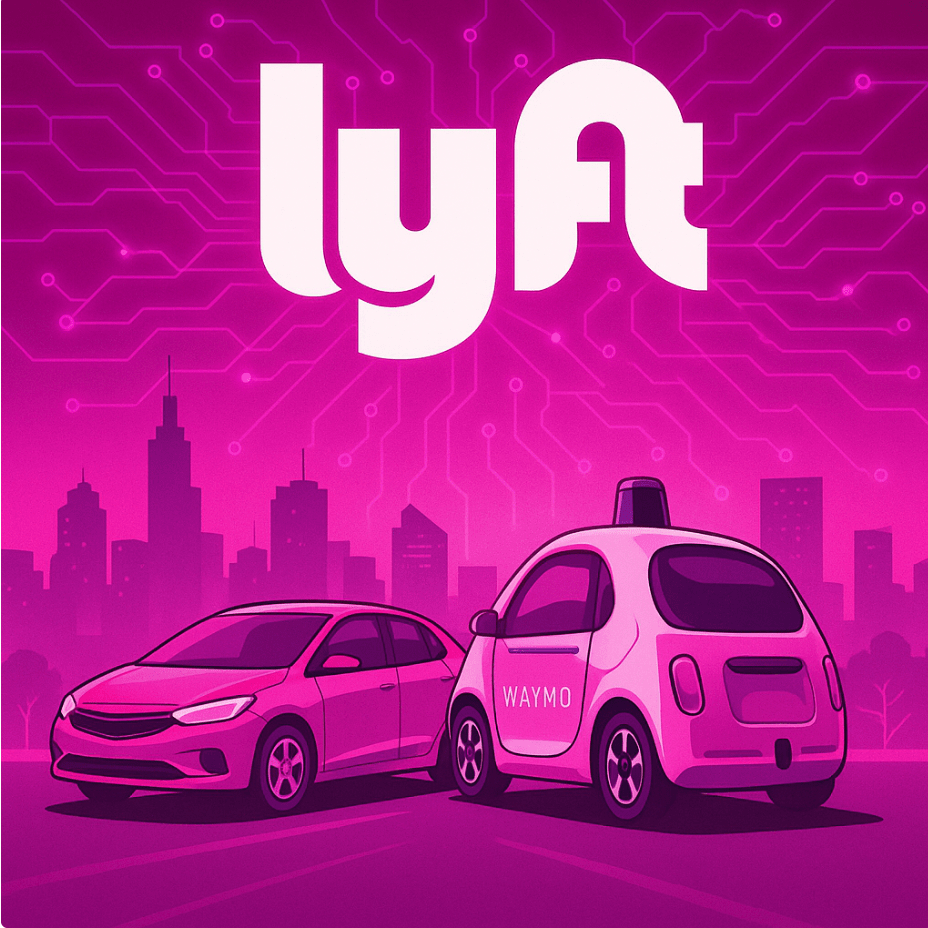
In early October 2025, just after my sale, Lyft’s stock surged more than 25% after announcing a partnership with Waymo — Google’s self-driving car division — to launch autonomous ride-hailing in Nashville starting in 2026.
Here’s what the deal means:
- Lyft will handle fleet management for Waymo’s self-driving cars through its Flexdrive platform — including maintenance, charging, and operations.
- Rides will first be available through the Waymo app, but later also through the Lyft app, creating shared demand between networks.
- It effectively puts Lyft inside the autonomous ecosystem, instead of being threatened by it.
The market loved it — and so did I. While I had already sold half my stake, it confirmed why Lyft still has a future: it’s learning to collaborate with the machines, not fight them.
In a single headline, Lyft went from “small fry ride-share” to “AI-enabled mobility partner.”
Lyft vs. Uber — The Underdog Edge
Uber might have the global dominance, but Lyft has agility. In the U.S. market, it can pivot faster.
Here’s what was appealing at the time of my 2023–24 buy:
| Metric (2024 est.) | Lyft | Uber |
|---|---|---|
| Price/Sales Ratio | ~1.8× | ~3.5× |
| Revenue Growth YoY | +10% | +15% |
| P/E Ratio | N/A (near break-even) | ~70 |
| Gross Margin | ~32% | ~31% |
| Focus | North America | Global (spreads thinner) |
Lyft was leaner, cheaper, and more local — less shiny, more focused. That combination often hides value.
What Lyft Actually Does (Explained for a 13-Year-Old)
Think of Lyft as an app that lets you summon a car with your phone — like magic.
Drivers who have free time can use Lyft to give rides, and Lyft takes a small percentage of what riders pay.
Now, with AI and self-driving cars, Lyft might not need human drivers for every ride in the future. That’s where the Waymo partnership comes in — it’s like your favorite video game adding an “auto-play” mode for real life.
A Bit of Self-Teasing
When I bought Lyft at $10, I remember thinking, “Maybe this becomes the next Uber. Or maybe I just end up with one more line in my portfolio that says ‘Learning Experience.’”
Turns out it doubled. Now I’m holding 5 free shares while Lyft rides the AI wave. Not bad for a supposed “learning experience.”
The Bigger Picture
Lyft’s story is far from over. It’s one of those underdog tech companies that refuses to disappear — leaner, hungrier, and now backed by the biggest name in self-driving tech.
And my little trade? It’s another example of how the Double-Up Free Stock Strategy keeps paying off:
- Minimal risk
- Free shares for optional upside
- A reason to stay curious about the companies I own
It might just be “peanuts,” but peanuts compound — especially when they’re AI-flavored.
Final Thought
From a $107 bet to a +95% gain and free shares in a company that’s now partnering with Waymo, this trade shows how small positions can create long-term excitement.
Lyft’s next chapter might be autonomous, but I’m happy to just sit back and enjoy the ride.

 BUY, SELL, KEEP
Leave a comment