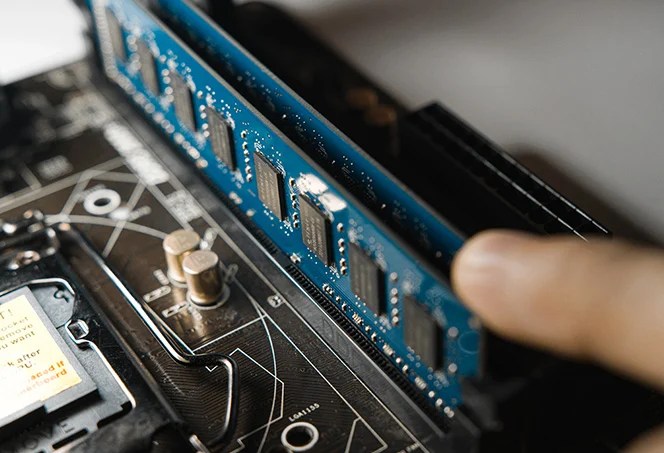
1. Slower Improvement in RAM Size
The fact that the size and cost of RAM have hardly changed in a decade while the prices for upgrades remain sky-high does make it feel like a ripoff. Here are a few more thoughts on why this seems ridiculous:
- 10 Years Ago: In 2014, many PCs already came with 8GB of RAM, and 16GB was considered a good upgrade for most users. Fast forward to today, and 16GB is still standard for most systems, with higher-end models offering 32GB or more, but only for specialized users.
- In contrast, CPU and GPU performance has skyrocketed. We’re seeing double or triple the processing power in some cases, yet RAM sizes have only slightly increased. This discrepancy makes the lack of RAM growth feel even more glaring.
2. Minimal Production Cost Difference
- RAM Prices Have Stabilized: The cost of producing RAM has not dramatically increased in recent years, especially for older technologies like DDR4. Yet, the prices manufacturers charge for upgrading RAM (especially when buying new systems) are still absurdly high compared to the manufacturing cost.
- A lot of the price difference is artificial and driven by market positioning. A PC with 32GB of RAM versus 16GB costs the manufacturer relatively little in terms of extra material, but the consumer often pays hundreds of dollars more for that upgrade. It’s clear that manufacturers are using RAM to inflate the price of devices in higher-tier segments.
3. Lack of Market Pressure
- There’s no urgent market demand pushing manufacturers to significantly increase RAM size or lower prices. Many average users don’t notice the need for more RAM, so manufacturers have little incentive to drastically drop the price of larger capacities.
- Meanwhile, they continue to charge inflated prices for larger RAM configurations because they know a smaller group of specialized users (like gamers, developers, and content creators) will pay more for the extra memory.
4. RAM as a Bottleneck to Profit
- RAM upgrades are an easy way for manufacturers to add an artificial premium to their devices. By limiting the base model to 8GB or 16GB, they force users who need more performance to pay for the upgrade, even though the actual cost of manufacturing the extra RAM is quite low.
- For example, Apple is notorious for charging steep prices for upgrading RAM in its devices, even though the same RAM would cost far less if purchased separately. The lack of user-upgradable options in many devices only adds to this frustration.
5. Comparisons to Other Components
- Consider the progress of other components in the last 10 years:
- Storage: The size and cost of SSDs have dramatically improved, with prices for 1TB drives falling to a fraction of what they were.
- CPUs: Processing power has surged, with more cores and faster speeds, all without the same level of price inflation.
- GPUs: While GPUs have also faced price inflation due to demand (especially in gaming and crypto mining), their performance leaps have been much more impressive than the small jumps in RAM capacity and speed.
When you see how other components have advanced in size and speed (and in some cases, price), the stagnation of RAM development feels even more unjustified.
6. Consumer-Friendly Alternatives
- If manufacturers were more consumer-friendly, they would make RAM upgrades easier and more affordable. Historically, RAM was something you could upgrade yourself, saving a lot of money by buying aftermarket modules. However, with many devices now having soldered RAM, consumers are locked into paying the steep upgrade prices upfront, often for no good reason other than profit.
Conclusion: It Is a Ripoff
The lack of significant improvements in RAM size and the continued high price of upgrades, despite minimal manufacturing cost differences, definitely makes it feel like a ripoff. Manufacturers exploit RAM upgrades to inflate device prices and segment product lines, taking advantage of users who need more memory but have limited options to upgrade on their own. In comparison to the leaps made in CPU, GPU, and storage technology, the stagnation in RAM size and the high cost feels increasingly absurd.

 BUY, SELL, KEEP
Leave a comment